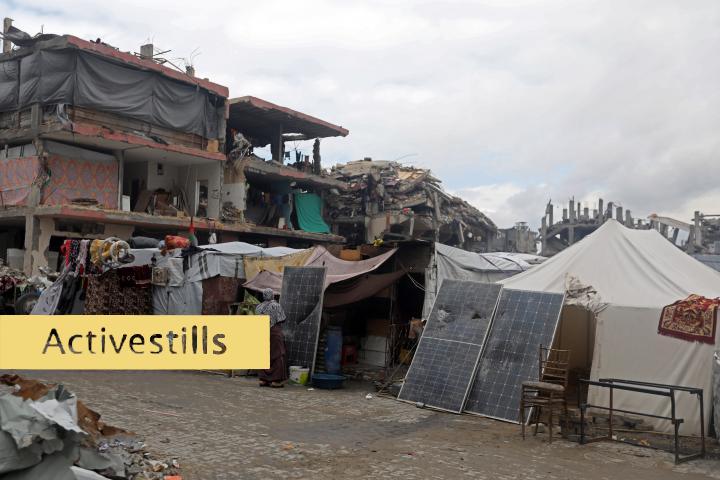
The situation of Palestinian refugees in Gaza, the West Bank, Lebanon, and Jordan reflects a systematic violation of fundamental human rights. Millions of people survive without recognized citizenship, restricted in their movement and deprived of access to basic services such as healthcare, education, or stable employment. This regime of territorial apartheid has been repeatedly denounced by international organizations, yet it continues to worsen due to military occupation and the inaction of the global community.
Restrictions on movement are central to this oppressive system. In Gaza, the ongoing blockade since 2007 has turned the territory into an open-air prison where 80% of the population depends on humanitarian aid. In the West Bank, military checkpoints and the separation wall fragment daily life, preventing access to agricultural land, medical centers, and family networks. According to UNHCR data, 95% of Palestinian refugees in Lebanon do not have legal work permits.
Faced with this reality, a resistance network based on education and cultural preservation has emerged. Schools administered by UNRWA teach new generations about the history of their people, while cultural centers such as the Tamer Institute in Gaza promote literature as a tool for identity. Initiatives such as the Palestinian Campaign for the Academic and Cultural Boycott (PACBI) link this local struggle with international solidarity networks.
Organizations such as Addameer document arbitrary detentions and offer legal assistance, while agricultural cooperatives in the West Bank combat land confiscation through traditional farming. Palestinian women play a prominent role, leading 75% of community initiatives according to the Palestinian Women’s Center, weaving networks of mutual support in the face of social fragmentation.
To understand these mechanisms of resistance and support them strategically, it is essential to analyze the power structures that sustain this situation. The military industry, companies that exploit resources in occupied territories, and diplomatic agreements that normalize the occupation are priority targets for international advocacy actions.