
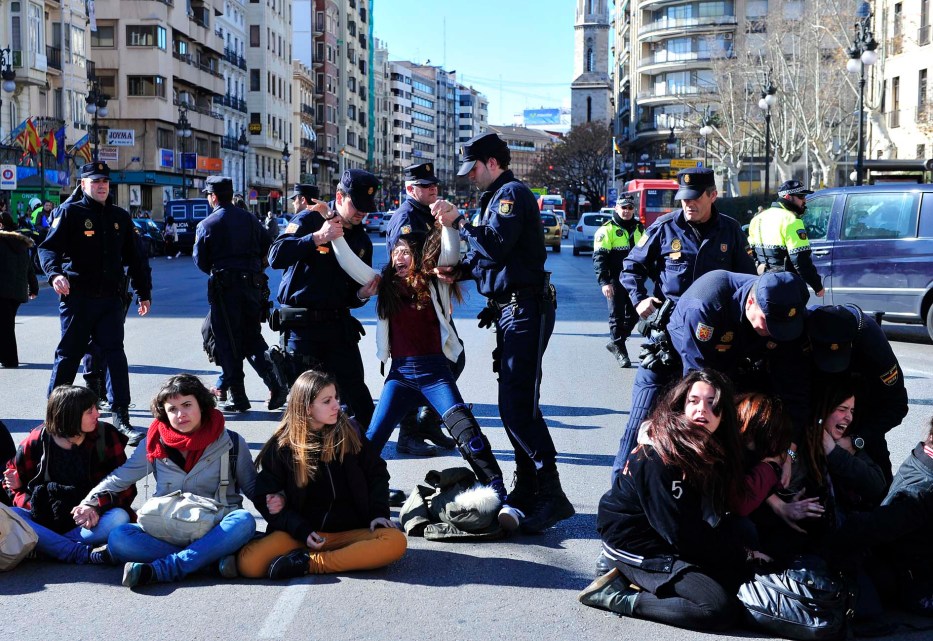
It is necessary to analyze how police repression functions as a smokescreen for the state’s inability to guarantee basic rights to the working class. It is evident that states prioritize social control over investment in redistributive policies, using police repression as a release valve in the face of material deterioration for the majority. Thus, the role of police forces is shaped as an instrument for maintaining the capitalist status quo.
A vicious cycle is established where the privatization of public services, labor precarity, and the dismantling of social protection networks generate discontent, which is subsequently repressed through police apparatuses. This mechanism exposes the alliance between state power and capital interests: instead of addressing the structural causes of poverty, its expression on the streets is criminalized through gag laws and “citizen security” protocols to justify disproportionate responses to social protests and the surveillance of dissident groups.
Data from international organizations reveal direct correlations between cuts in healthcare, education, or housing and increases in police budgets. This trend clearly demonstrates neoliberal logic: more coercion to protect the accumulation of wealth in private hands. Police forces have become guardians of inequality, acting as a barrier against systemic change, repressing legitimate demands for decent work or environmental protection. Moreover, they operate with impunity, another piece of the structural mechanism protecting elites, as noted by scholars such as Alex Vitale.
There is an urgent need to promote alternative models based on community conflict resolution, distanced from punitive logic. Initiatives like mutual aid networks or restorative justice systems demonstrate that collective security is built through social cohesion, not repression. ECOAR))) advocates for these alternatives through educational campaigns and non-violent direct action.
It is necessary to defund police forces to invest in social programs, public health, and tools for citizen participation, to rebuild the social fabric eroded by capitalism. The radical transformation of the security model will only be possible through collective mobilization and the construction of anti-fascist popular power. True security emerges from universal access to basic resources, not from the militarization of public space.