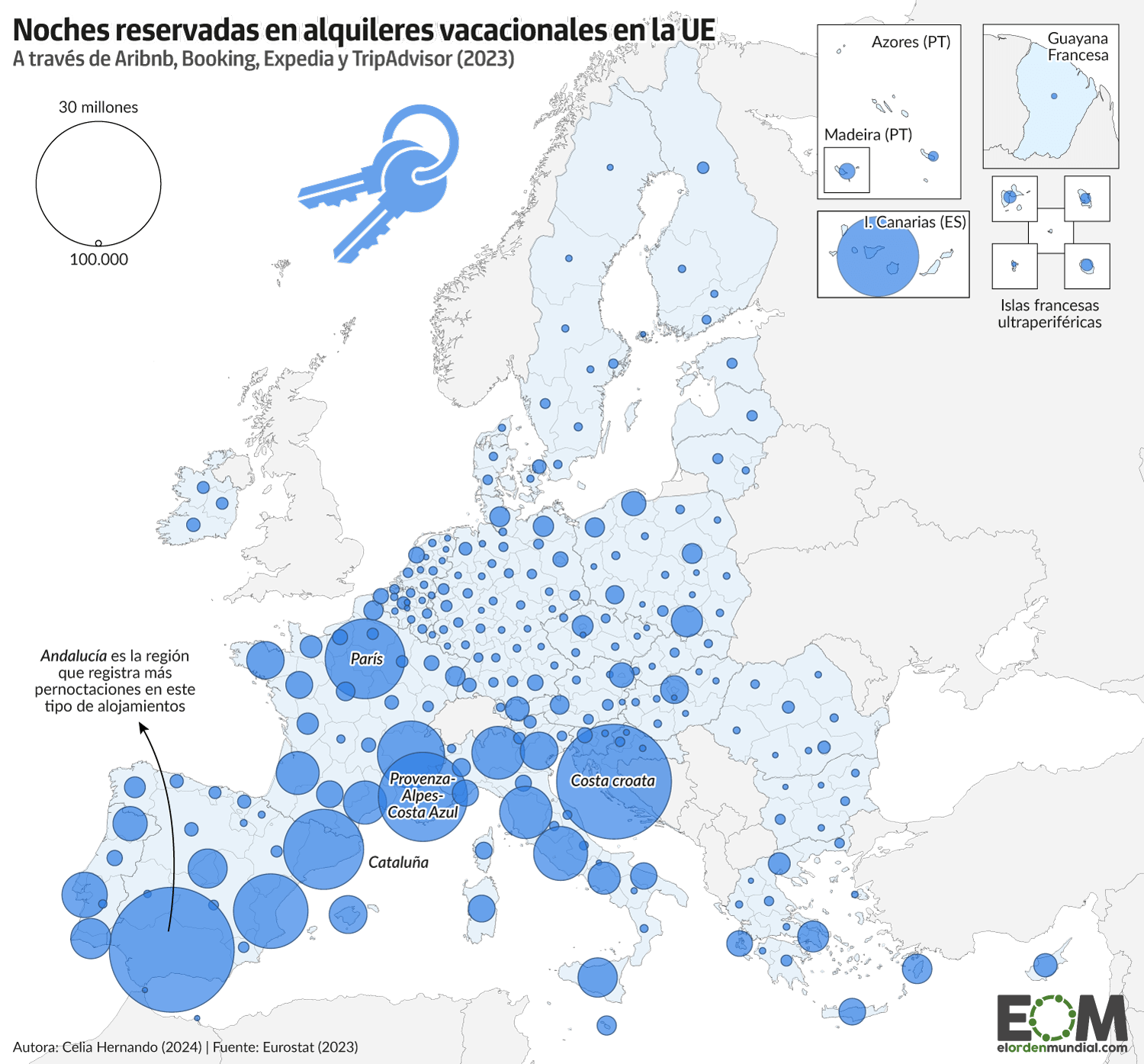
The expansion of short-term tourist rentals facilitated by digital platforms such as Airbnb, Booking, or Expedia has profoundly transformed urban life in the European Union. In 2024, more than 854 million nights were booked, a historic record that shows the growing power of a globalized economic model prioritizing private profit over residents’ needs.
Far from being a neutral activity, this boom is exacerbating the housing crisis. In cities like Madrid, Barcelona, Paris, or Rome, prices and rents have soared while many long-term apartments are converted into tourist rentals, drastically reducing the availability of housing for residents. The right to decent housing is being sacrificed for the economic interests of platforms and investors, while public policies arrive late and fragmented.
The social effects are also evident. Traditional neighborhoods see local commerce and community services disappear, replaced by businesses catering exclusively to tourists. Social cohesion and residents’ quality of life are threatened, and the inequality between those who benefit from tourism and those who suffer its consequences has intensified. Urban transformation is not a side effect; it is a direct result of permissive policies and insufficient regulation.
Political responsibility is paramount. Without effective control, tourism will continue serving private interests rather than the common good. The real challenge is not to balance tourism and residents, but to halt urban speculation that destroys cities, ensuring that European cities do not become lifeless theme parks, but habitable and fair spaces for the people who live in them.
📸 Nights booked in holiday rentals in the EU. Produced by: El Orden Mundial