Access to housing has become the main social challenge in Spain. While around 200,000 new households are created each year, the supply of new housing does not reach 100,000 units, generating a structural deficit that the Bank of Spain estimates at 700,000 properties. This imbalance, aggravated by the pressure of tourism and tourist rentals, has caused a cumulative increase in property purchase prices of nearly 90% over the last decade, making housing increasingly unaffordable for large segments of the population.
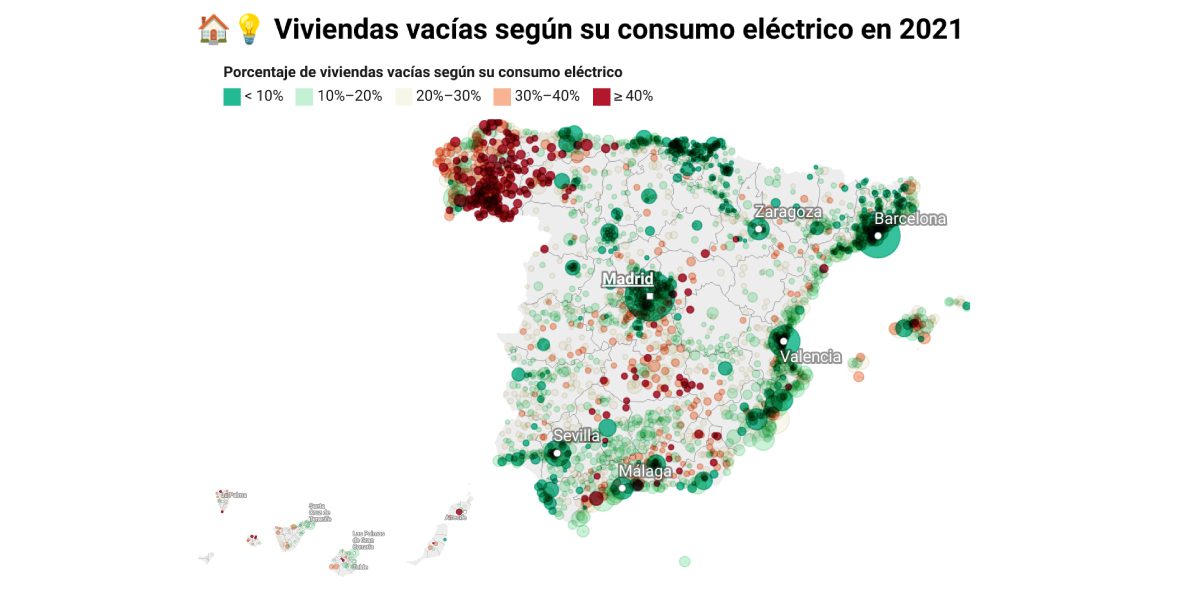
Paradoxically, the National Institute of Statistics (INE) recorded almost 3.8 million empty homes, representing approximately 14.4 % of the total residential stock, one of the highest rates in Europe. The majority of these are concentrated in rural municipalities with fewer than 10,000 inhabitants, while in large cities, where demand is highest, availability is minimal, highlighting that the problem is not only quantity but also location and speculation. In Galicia, for example, seven out of eight empty homes are in sparsely populated areas, while urban centers face extreme rental pressure.
The rise in rental prices reflects the critical situation. In 2025, the average rent reached 1,184 euros per month, with a 5.9% year-on-year increase, and in cities such as Barcelona, Madrid, or Málaga, families spend nearly 40% of their net income on rent. The supply of traditional rental housing continues to decline —in Catalonia, 4.7% of stock was lost— while demand multiplies, with up to 462 applicants per property in Barcelona. This phenomenon is driven both by the conversion of residential units into tourist rentals and by the perception of legal insecurity, which limits the social rental market.
This situation stems from structural and political causes: insufficient supply versus rising demand, presence of foreign buyers, pressure from tourist rentals, and real estate speculation. The result is a scenario in which the right to decent housing is increasingly threatened, highlighting the need for a social and political debate on market regulation, urban land distribution, and protection of the population from speculation.
📸 Percentage of empty homes based on their electricity consumption. Source: newtral.es