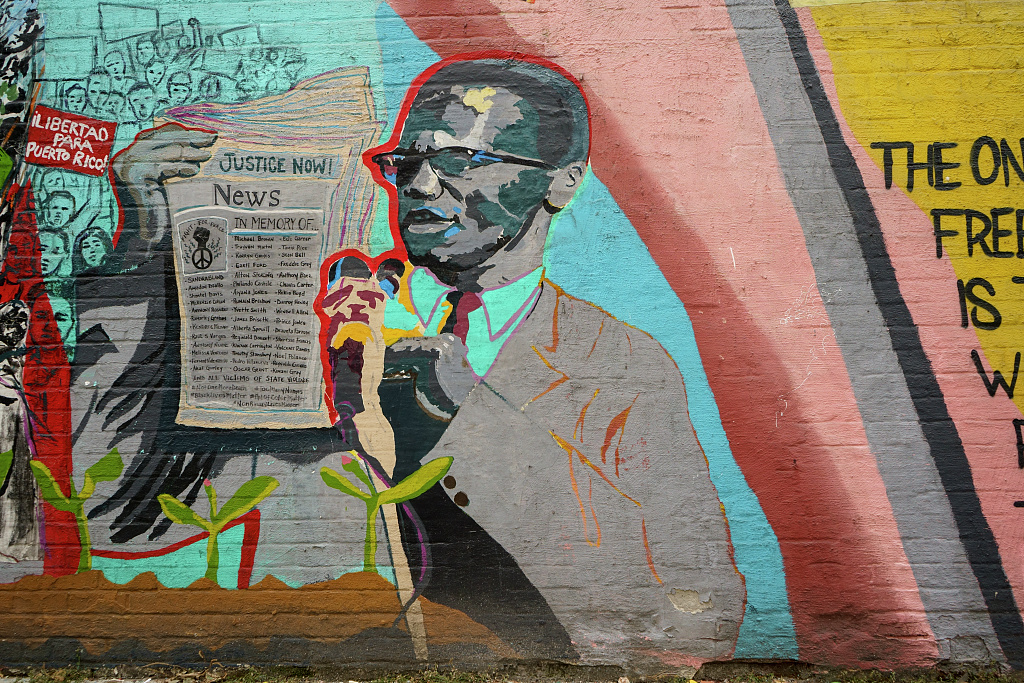
On February 21, 1965, the Audubon Ballroom in Harlem became the scene of a political crime that shook the civil rights movement. Malcolm X, former spokesperson for the Nation of Islam and later founder of the Organization of Afro-American Unity, was assassinated after being shot multiple times (21 gunshot wounds) during a public event. The material perpetrators belonged to the Nation of Islam, the organization he had left one year earlier. This was not merely an individual killing: it must be understood within a broader context of structural repression against a voice that challenged racial capitalism and internal colonialism in the United States.
Born Malcolm Little in 1925, his life trajectory symbolizes radical resistance to systemic violence. After a youth shaped by institutional racism, his speeches in the 1960s redefined the racial debate in the U.S. He defended self-defense as a response to violence exercised by white supremacy and police brutality, distancing himself from the strictly pacifist strategies of other movement leaders. His evolution toward an anti-colonial and anti-imperialist analysis, influenced by African liberation struggles and Third World internationalism, turned him into a threat to the established power structure.
The immediate context surrounding the assassination reveals a web of institutional hostility. The FBI, through its COINTELPRO program, actively surveilled, infiltrated, and sabotaged the organizations in which he participated. The Nation of Islam contributed to a climate of internal persecution following his split in 1964. At the same time, mainstream media systematically criminalized him, portraying his denunciations of structural racism as “incitement to violence.” Malcolm X received repeated death threats that were deliberately ignored by authorities.
Later investigations showed that the state concealed key information about the crime. In 2021, the Manhattan District Attorney’s Office acknowledged that the FBI and the New York Police Department had withheld exculpatory evidence, leading to the exoneration of two wrongfully convicted men. These facts point to a form of structural complicity aimed at neutralizing his growing influence among urban Black youth and anti-Vietnam War movements, precisely when Malcolm X was building transnational political alliances that challenged Western hegemony.
His legacy transcends the twentieth century. The slogan “by any means necessary” became an organizing principle for those confronting systems of oppression. The Black Panther Party, the Black Lives Matter movement, and contemporary struggles against police violence all draw from his political thought. The affirmation of African identity, self-determination, and internationalist solidarity remain central pillars of today’s anti-racist activism.
His demand for liberation—not mere integration—remains fully relevant in a world shaped by global capitalist exploitation and structural racism.