Palestinian women have historically spearheaded the anti-occupation resistance through community networks, from the 1936 uprising through the Intifadas to the present day. Currently, Palestinian women comprise 60% of the university student body and lead human rights NGOs in the territory. This structural role is reaffirmed in the current war, where they are at the forefront of underground medical units and agricultural brigades to ensure food sovereignty under the blockade. They are leaders in directing and organizing resistance actions, protests, and mobilizations, as well as spearheading legal resistance and denunciation processes.
In the Gaza Strip, groups like the Union of Palestinian Women’s Committees maintain clandestine clinics and psychological support networks, while documenting war crimes. However, women’s participation in Gaza is characterized by taking part in protests along the border with Israel, participating in the armed resistance directly or through logistical support, carrying out acts of extreme civil disobedience, and organizing hunger strikes and acts of self-affirmation within prisons. In the West Bank, organizations like the Popular Resistance Committees lead direct protests against settlers and military posts, while also coordinating neighborhood actions and blockades, serving as local leaders of the resistance. Furthermore, women’s participation in the West Bank also involves organizing and participating in protests against settlements and demolitions, developing various forms of economic and symbolic resistance, carrying out boycotts, and undertaking significant legal action at both the state and international levels.
On the other hand, Israeli repression takes the form of institutional femicide, to which must be added torture, harassment, arbitrary arrests, and more. Palestinian women lead broad areas of resistance, but as a consequence, they face a specific form of repression that blends colonial and patriarchal perspectives. Arbitrary arrests, physical and sexual violence during detention, threats of eviction, and media defamation aimed at delegitimizing their activism are just some of the specific forms of repression suffered by Palestinian women. Israeli authorities often target their participation in protests or community programs, while in certain contexts, social and patriarchal pressure within the communities themselves adds further layers of difficulty. This repression not only attempts to silence them but also to dismantle networks of solidarity and resistance structured and led by women, with the aim of weakening the collective capacity for denunciation and civic action.
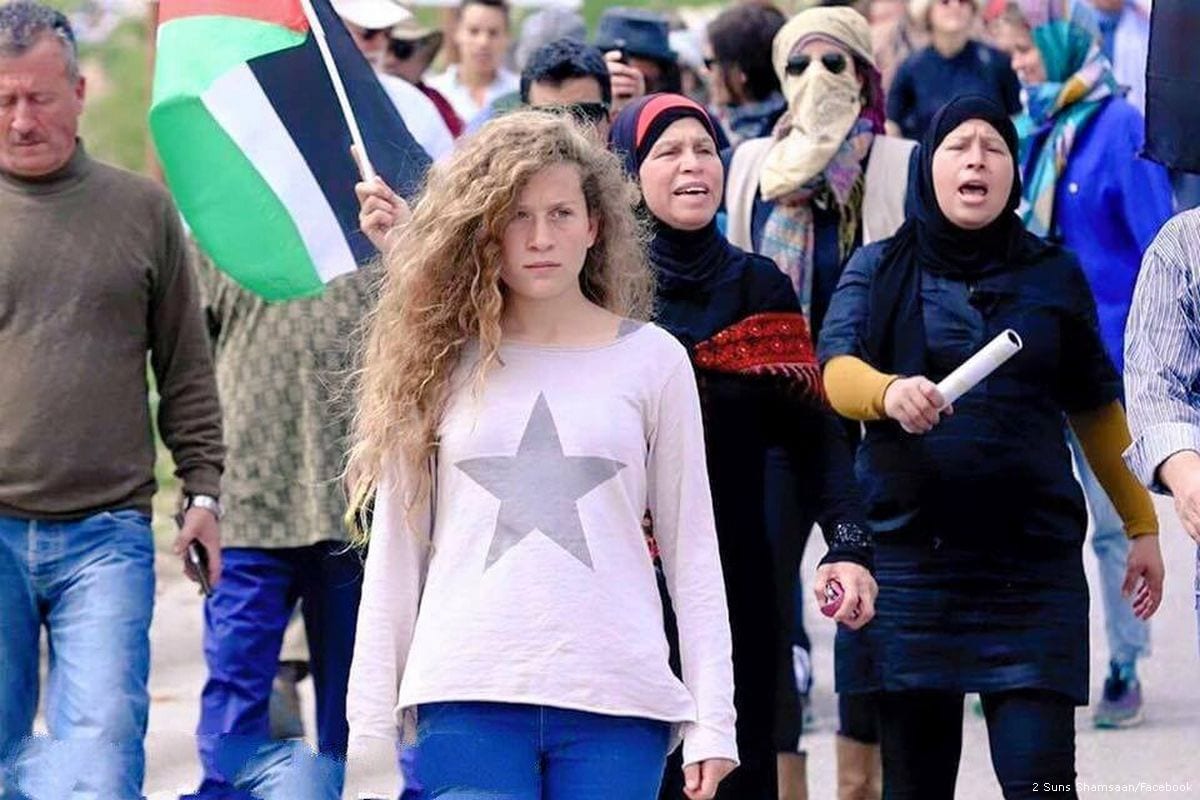
Figures like Ahed Tamimi (a symbol of youth resistance after being imprisoned at age 16), Mariam Barghouti (a journalist who denounced the Israeli occupation and its consequences on the daily lives of Palestinians), and Fatima Bernawi (the first woman to be imprisoned for political reasons (1967), whose life combines militant action, armed struggle, and inspiration for contemporary women’s resistance) are just some of the names that have sustained and continue to sustain the struggle for the liberation of Palestine.
Palestinian women are a key element in shaping the social response against the Israeli occupation, combining leadership and action in all spheres of daily and political life. Today, it would be unthinkable to imagine the existence of Palestine itself without their historical role in building a society constructed through popular resistance.