
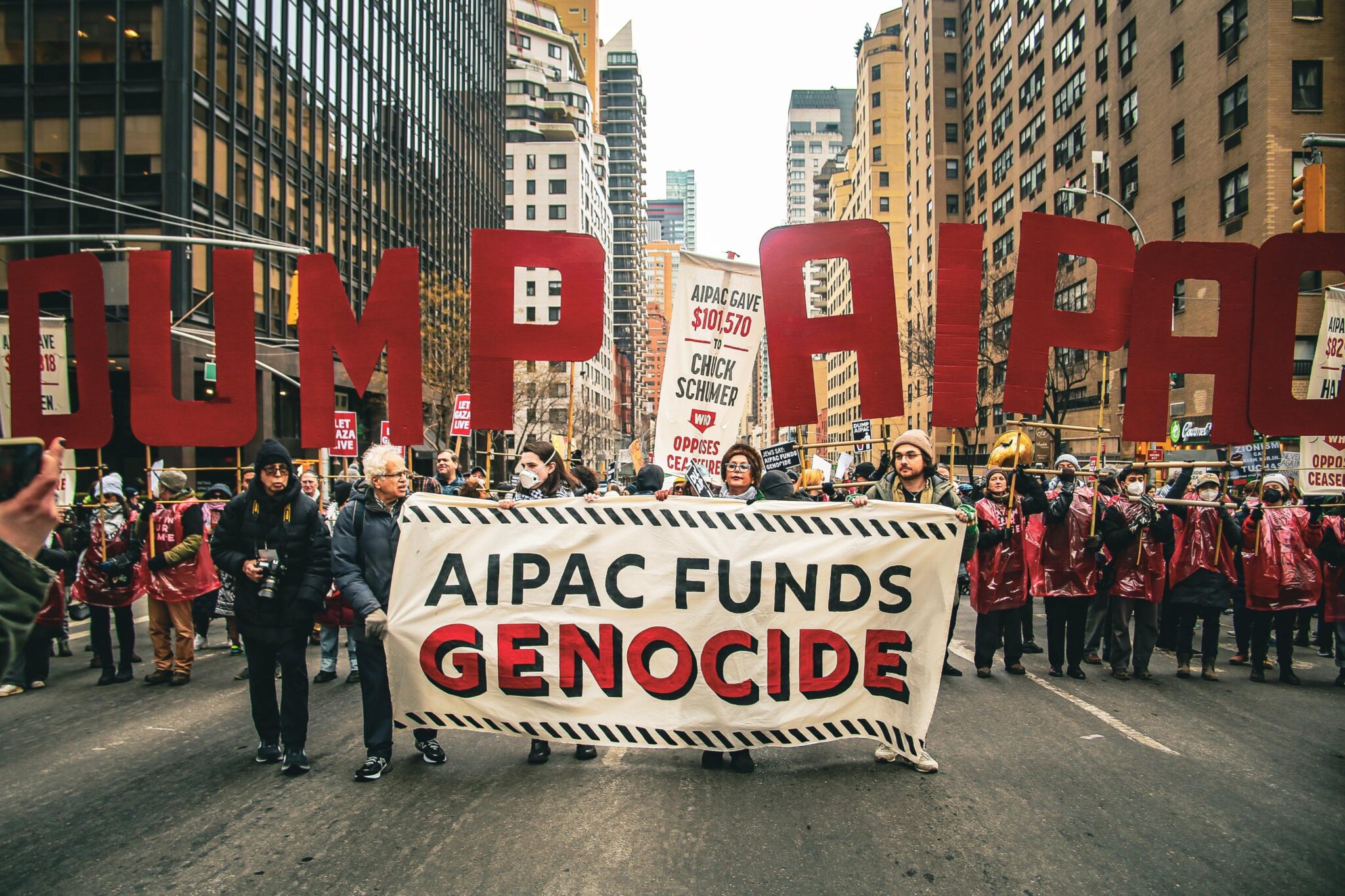
US foreign policy regarding Israel maintains a line of unconditional support, whose structural root escapes official narratives. A rigorous analysis reveals how the American Israel Public Affairs Committee (AIPAC), recognized as one of the most influential lobbies in the country, exerts systematic pressure on legislators and politicians. On one hand, by financing electoral campaigns; on the other, by shaping positions on international policies through specialized pressure groups.
Historically, this dynamic was consolidated through the so-called “shared security doctrine,” which makes US military financing for the Israeli regime permanent and almost automatic, involving multi-million dollar contributions in military aid to Israel. However, independent researchers have documented how AIPAC also actively intervenes in US domestic legislation, promoting known Anti-BDS laws that range from controlling companies to prevent them from engaging in boycott to the criminalization of peaceful activism.
The impact of these mechanisms extends beyond foreign policy: it directly influences the configuration of media discourse, the creation of biased narratives, and the systematic obstruction of international resolutions critical of fundamental rights violations against the Palestinian people. Theoretical democratic systems reveal structural contradictions here, when private powers dictate public policies against the general interest.
Given these realities, an informed citizenry is required, capable of demanding transparency in political processes and breaking corporate influence circles. In the struggle against global injustices, knowledge of these connections constitutes the first step to dismantling the architectures of power that sustain asymmetric conflicts. Mobilization is therefore called for, towards a collective critical vision that questions alliances that ignore international law and human dignity.