The energy system in Israel and the occupied Palestinian territories plays a strategic role both politically and in terms of control over resources and infrastructure. Israel exports technology, knowledge, and services related to renewable energy and energy efficiency, and Israeli companies participate in international projects in the field of clean energy and network management. At the same time, most of the energy consumed in Israel continues to depend on fossil fuels, according to data from the International Energy Agency on the country’s energy consumption.
In the Palestinian territories, access to electricity has historically been dependent on Israel and coverage is highly insufficient in relation to total needs. The territories obtain most of their electricity supply through imports from the Israeli grid, along with contributions from third parties and limited local generation, such as the Gaza power plant and solar installations.
Before 2023, Gaza received a significant portion of its electricity via lines connected to the Israeli grid and from its own plant, but the supply was still insufficient, and demand far exceeded the available supply.
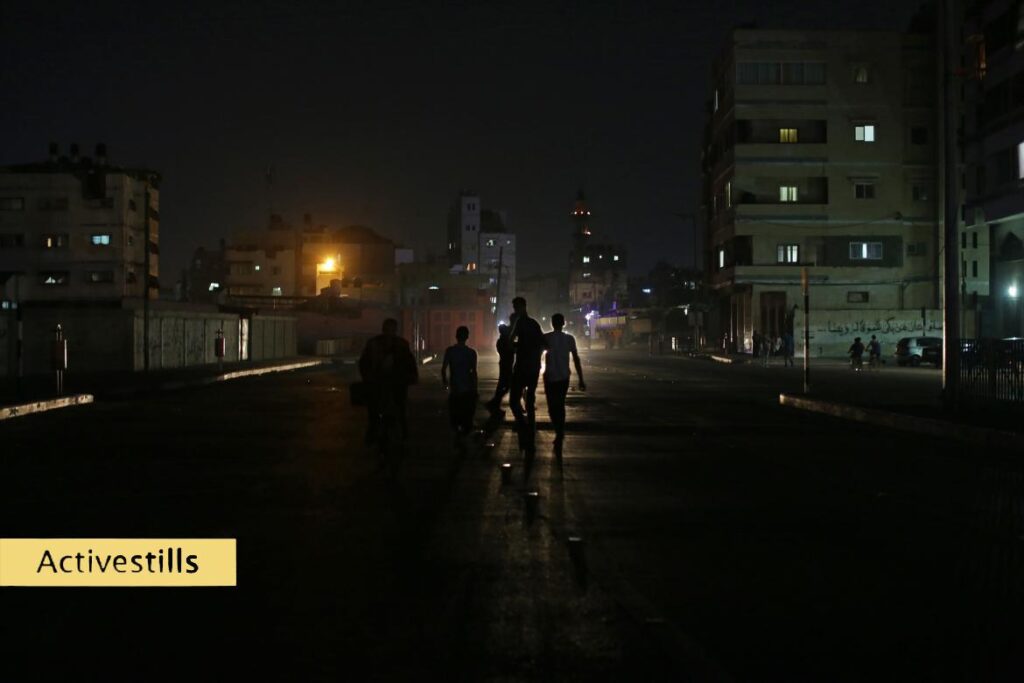
The electricity crisis intensified with the 2023 conflict and Israel’s decisions to cut off direct energy supplies to the enclave—including the suspension of formal electricity supplies in early 2025—leaving many people without access to stable energy and forcing them to rely on generators and solar panels whenever they are available.
This situation has serious humanitarian consequences: without adequate electricity, water and sanitation systems, hospitals, schools, and basic services are compromised in their ability to function. The power cut to Gaza’s main desalination plant dramatically reduced its production of drinking water, affecting access to water for the civilian population.
In response, Palestinian communities and organizations are working on renewable energy projects (e.g., installing solar panels in towns that lack a stable supply) and international campaigns are calling for measures to ensure continuous access to electricity and fuel for civilian use.