Right-wing information simulation is no longer an isolated phenomenon; it has become a coordinated strategy across the West. Figures such as Milo Yiannopoulos, Vito Quiles, Javier Negre, Joey Mannarino, Alexander Raue and Pascal Praud share a common pattern: they act as paid provocateurs, simulate journalism and spread falsehoods and inflammatory content. When called out, they invoke censorship and persecution. The phenomenon affects democratic quality and the right to information.
The method combines social media, aggressive language and an appearance of professionalism. These actors use press credentials, video platforms and their own media outlets to amplify messages. They do not verify facts; they invent them, and they do not offer context or present it in a self-serving way. They seek virality and monetization at all costs. In Italy, Joey Mannarino, a “content creator” with more than 500,000 followers on Instagram and 650,000 on X, works for “Ad Victoriam International” advising Trump-aligned politicians and obtained temporary press accreditation at the Pentagon. In Germany, Alexander Raue earns more than 500,000 euros a year spreading falsehoods. In France, Pascal Praud, a former sports commentator, hosts a program on the Bolloré group’s channel where he feels legitimized to produce far-right propaganda. The Dutchman Tom Van Den Heuvel has accumulated more than three million views with “decline porn” content and engages in fights as a viral tactic of xenophobic propaganda.
Opaque public funding is one of the network’s central axes. Fragmented minor contracts avoid tenders and technical justifications. In the Spanish State, PP administrations allocated hundreds of thousands of euros to EDA TV, Javier Negre’s propaganda platform, and to other far-right media. These outlets report false audience statistics to win institutional advertising contracts. The Ciudad Real Provincial Council paid 29,538 euros to EDA TV Consulting SL since 2023. The Consell de Ibiza allocated more than 30,000 euros through the public company Fecoev. The Junta of Castile and León paid 833 euros per minute for a video with only 245 views. In the 2024 Hungarian election campaign, the “Megafon Center” coordinated “influencers” with identical scripts and spent 2.2 million euros amplifying synchronized content.
Transnational coordination connects networks from the United States to other countries. Consultants, funders and strategies are shared among the campaigns of Trump, Milei, Bolsonaro and European projects, with a prominent role played by Argentine operator “Fernando Cerimedo”. Social networks such as X and Instagram reward this content while penalizing any reasoned response. The use of “bots” and fake profiles artificially increases virality. Crises such as the recent one in Ceuta give them content and opportunities to spread more propaganda.
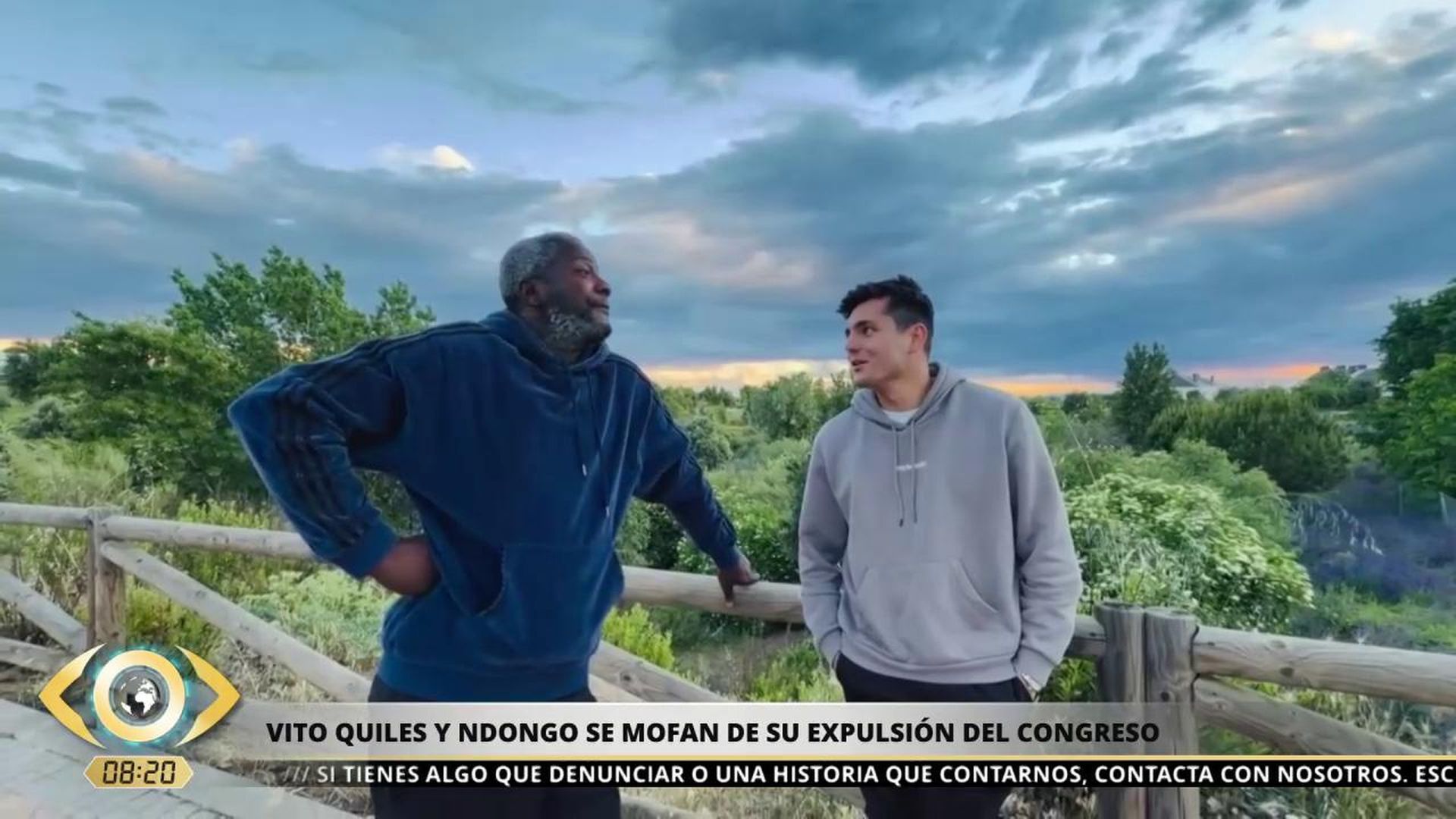
When called out, the provocateurs claim censorship. In the Congress of Deputies, Vito Quiles had his accreditation definitively withdrawn in September 2026 for harassing behaviour, which allows him to present himself as a victim and claim persecution, thereby gaining more attention. International bodies such as the European Parliament, the Parliamentary Assembly of the Council of Europe and the OSCE are debating legal instruments against information manipulation and foreign interference.
The impact on democracy is profound. Youth disinformation, the erosion of trust in institutions and the normalization of violence weaken public debate. Information simulation is not an exercise of freedom of expression (since it reinforces the discourse of power), but a coordinated strategy that captures public and private resources. Documenting funding flows, demanding transparency and protecting professional journalism are necessary conditions for preserving the right to information.
Sources
-
EFE (2026). El ICE detiene al ultraderechista británico Milo Yiannopoulos, exsimpatizante de Trump. https://efe.com/mundo/2026-08-28/ice-detencion-ultraderechista-britanico-milo-yiannopoulos-exsimpatizante-trump/
-
CNN (2026). British provocateur Milo Yiannopoulos faces deportation after a career in the American far-right. https://www.cnn.com/2026/08/29/us/milo-yiannopoulos-ice-deportation-what-to-know
-
RTVE (2026). El Congreso acuerda quitarle de forma definitiva la acreditación de prensa a Vito Quiles. https://www.rtve.es/noticias/20260922/congreso-quita-definitiva-acreditacion-prensa-vito-quiles/17234902.shtml
-
El Plural (2026). El PP hace de la Diputación de Ciudad Real el mayor cajero público de Vito Quiles en Castilla-La Mancha. https://www.elplural.com/autonomias/castilla-la-mancha/pp-hace-diputacion-ciudad-real-mayor-cajero-publico-vito-quiles-castilla-la-mancha_390000102
-
El País (2026). De condenado por daño al honor a periodista “privilegiado” por la Casa Blanca de Trump: la metamorfosis de Javier Negre. https://elpais.com/expres/2026-07-12/de-condenado-por-acoso-a-periodista-de-confianza-de-trump-la-metamorfosis-de-javier-negre.html
-
Domani (2026). Social, fundraising e “remigrazione”: l’ascesa di Joey Mannarino. https://www.editorialedomani.it/politica/italia/joey-mannarino-ascesa-uomo-qualunque-maga-italia-social-fundraising-remigrazione-a8f2xa63
-
Infobae/EFE (2026). Meloni se desvincula del vídeo generado con IA donde se arroja a opositores a los leones. https://www.infobae.com/america/agencias/2026/07/21/meloni-se-desvincula-del-video-generado-con-ia-donde-se-arroja-a-opositores-a-los-leones/
-
Übermedien (2024). Der irre Aufstieg eines rechten YouTubers. https://uebermedien.de/94259/der-irre-aufstieg-eines-rechten-youtubers/
-
Toute la télé (2026). Pascal Praud répond à des accusations sur CNews “Tout est faux !”. https://toutelatele.ouest-france.fr/pascal-praud-repond-a-des-accusations-sur-cnews-tout-est-faux-189614
-
The Bulletin (2026). ‘Decline porn’: Brussels attracting far-right YouTubers. https://www.thebulletin.be/decline-porn-brussels-attracting-far-right-youtubers
-
Political Capital (2025). Megafon Center spending during 2024 campaign. https://politicalcapital.hu/pc-admin/source/documents/Uncovering_analyzing_debunking_and_researching_sponsored_disinfo_project_summary_2024.pdf
-
Granma (2026). Warning issued about transnational political-media influence network centered in the United States. https://en.granma.cu/mundo/2026-08-27/warning-issued-about-transnational-political-media-influence-network-centered-in-the-united-states
-
Europarl (2026). Pregunta con solicitud de respuesta escrita E-002389/2026. https://www.europarl.europa.eu/doceo/document/E-10-2026-002389_ES.html
-
El Plural (2026). “833 euros por minuto”: la crítica de Juanma Fernández a un contrato de la Junta de Castilla y León con EDA TV. https://www.elplural.com/politica/espana/833-euros-minuto-critica-juanma-fernandez-contrato-junta-castilla-leon-eda-tv_389341102