
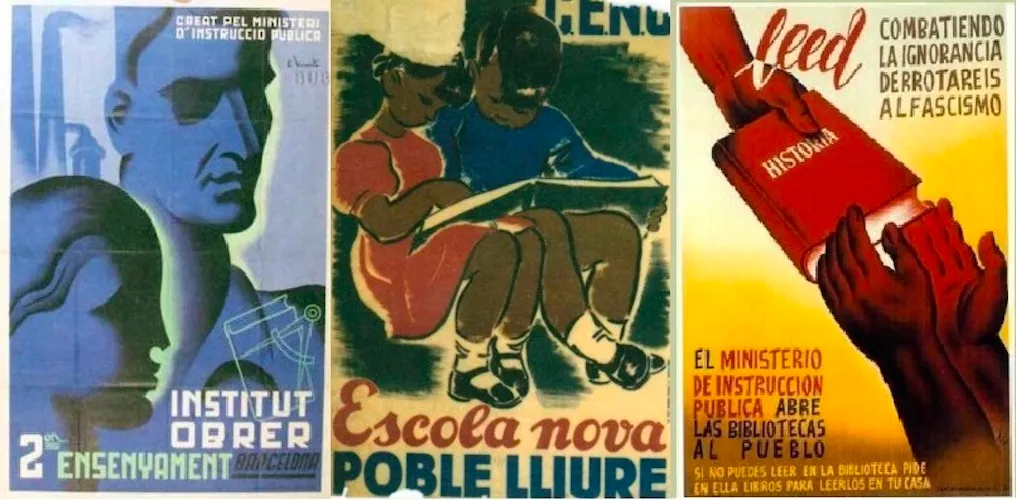
Different intellectual figures developed their thinking and work around how to combat fascism. Thus, antifascism is not only a street struggle, but also a philosophical and cultural construction that benefited from the contribution of some of the most lucid minds of the 20th century.
Among others, Gramsci’s development of the theory of hegemony stands out, in which he explains how the ruling class maintains power not only through violence, but through cultural consensus, infiltrated into institutions such as the church, the school, or the media. His concepts such as passive revolution or war of position remain fully valid today.
Later, Adorno and Horkheimer, of the Frankfurt School, conceive Auschwitz as a product of Western rationality, a “self-destruction of reason.” Along these lines, Habermas clearly positioned himself and postulated that the best antidote against totalitarianism is “communicative reason.”
Also noteworthy are Hannah Arendt, who analyzed the origins of totalitarianism and the condition of pariah; Simone Weil, who fought in the Spanish Civil War with Durruti’s column and denounced oppression in all its forms; and Simone de Beauvoir, who helped us understand that individual freedom is inseparable from collective freedom. They are some of the philosophers who embodied resistance to totalitarianism from very different perspectives, and from whose thinking we still draw today for the struggle.