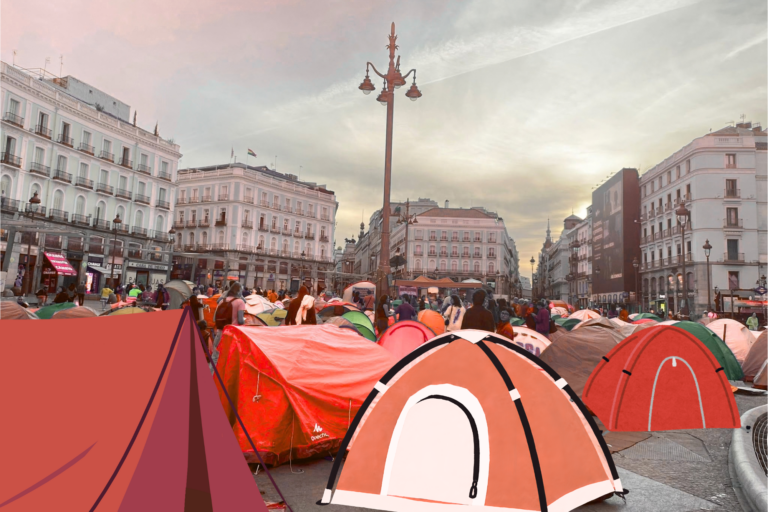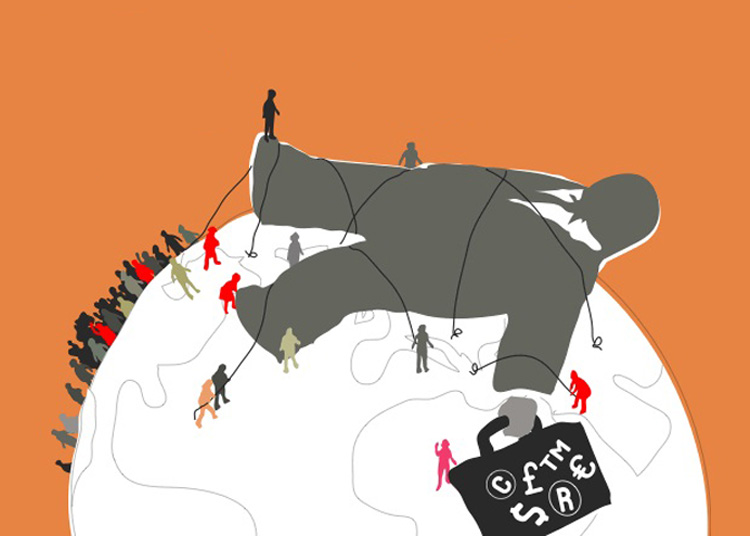
The persecution of dissent and critical thinking is intensifying in the West through legislative mechanisms, increases in security forces, and the criminalisation of social protest. In both the United States and the European Union, governments are developing regulatory frameworks that restrict political and civil rights and silence voices that question the status quo, in a context of the rise of the far right and growing social unrest.
In the United States, the Trump administration launched an unprecedented offensive against left-wing and pro-human rights movements. This strategy was formalised through the National Security Presidential Memorandum 7 (NSPM-7), issued in September 2025, which equates political dissent with terrorism. A clear example occurred in Texas, where eight activists were sentenced in June 2026 to between 50 and 100 years in prison for participating in a protest outside an immigration detention centre. These types of sentences seek to criminalise ideologies unfavourable to the Government while also aiming to send a deterrent message.
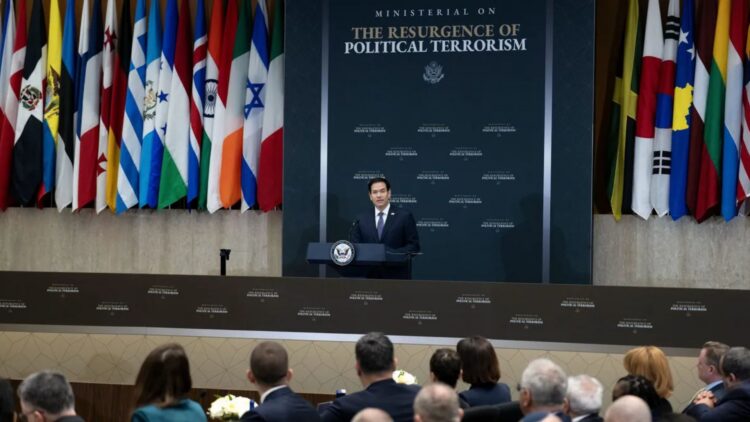
The Trump administration is orchestrating an unprecedented strategy that synthesises the McCarthyism of the 1950s with the tools of the “war on terror” that emerged after 9/11. The ministerial meeting convened by Marco Rubio in July 2026, with representatives from over sixty countries in attendance, is not a simple diplomatic exercise but rather the staging of a new doctrine that places left-wing dissent on the same level as Al Qaeda and the Islamic State. This legal architecture, which employs financial and intelligence tools conceived to confront Al Qaeda, is being directed against Americans considered to be left-wing, assuming that American and European organisations and individuals pose a danger to American society. In fact, this counterterrorism strategy went a step further in May 2026, as Trump legally formalised this vision by merging three threat categories: “Islamist terrorists”, “narcoterrorists” and, for the first time, “violent left-wing extremists, including anarchists and antifascists”.
On the other hand, in the European Union, the Fundamental Rights Agency pointed out in its July 2026 report continued concerns about smear campaigns, prosecutions of activists, funding cuts, and restrictive legislation for freedom of association. Liberties’ Rule of Law Report 2026 documented widespread restrictions on the right to peaceful protest, with cases such as that of the Spanish State, where the citizen security law continues to impose sanctions on protesters and journalists, or that of Italy, where the Meloni Government approved a security decree in April 2026 that criminalises protest actions and reinforces police guarantees through an emergency procedure.
These repressive trends, which combine gag laws, increased surveillance and police repression, as well as penal hardening and political and ideological persecution, represent an escalation in the strategy of dismantling dissent and disagreement. The aim is to go a step further by creating a framework in which, having already passed the phase where vandalism was equated with violence and terrorism, a further step is taken that seeks to have citizen participation and protest perceived as threats to security rather than as fundamental rights.
Sources:
-
National Law Review (2025). FARA Enforcement Gets a Major Shake-Up Under New Presidential Directive. https://natlawreview.com/node/336559/printable/pdf
-
The Guardian (2026). Alarm over ‘extreme’ sentences for anti-ICE protesters convicted of terrorism. https://www.theguardian.com/us-news/2026/jun/26/texas-protesters-anti-ice-convictions
-
U.S. Department of State (2026). Results from the Ministerial on the Resurgence of Political Terrorism. https://www.state.gov/briefings-foreign-press-centers/ministerial-on-resurgence-of-political-terrorism-results
-
European Union Agency for Fundamental Rights (2026). FRA contributes to Commission’s 2026 Rule of Law Report. https://fra.europa.eu/fr/news/2026/fra-contributes-commissions-2026-rule-law-report
-
Civil Liberties Union for Europe (2026). Civic Space and Protest Rights under Threat in 2025. https://www.liberties.eu/en/stories/civic-space-and-protest-rol2026/45622
-
光明网 (2026). 《安全法令》引发意大利新一轮政治博弈. https://news.gmw.cn/2026-04/29/content_38737401.htm
-
The Guardian (2026). Texas anti-ICE protesters convicted of terrorism charges sentenced to at least 50 years in prison. https://www.theguardian.com/us-news/2026/jun/23/prairieland-ice-protesters-texas-sentenced
-
The Times of India (2026). US secretary Rubio invites India, 60 nations to summit on ‘far-left terrorism’. https://timesofindia.indiatimes.com/world/us/us-secretary-rubio-invites-india-60-nations-to-summit-on-far-left-terrorism/amp_articleshow/132303650.cms
-
Criminal Legal News (2025). Office of the Attorney General Memorandum for All Federal Prosecutors, Implementing National Security Presidential Memorandum-7. https://www.criminallegalnews.org/news/publications/office-of-the-attorney-general-washington-dc-memorandum-for-all-federal-prosecutors-implementing-national-security-2025-1/