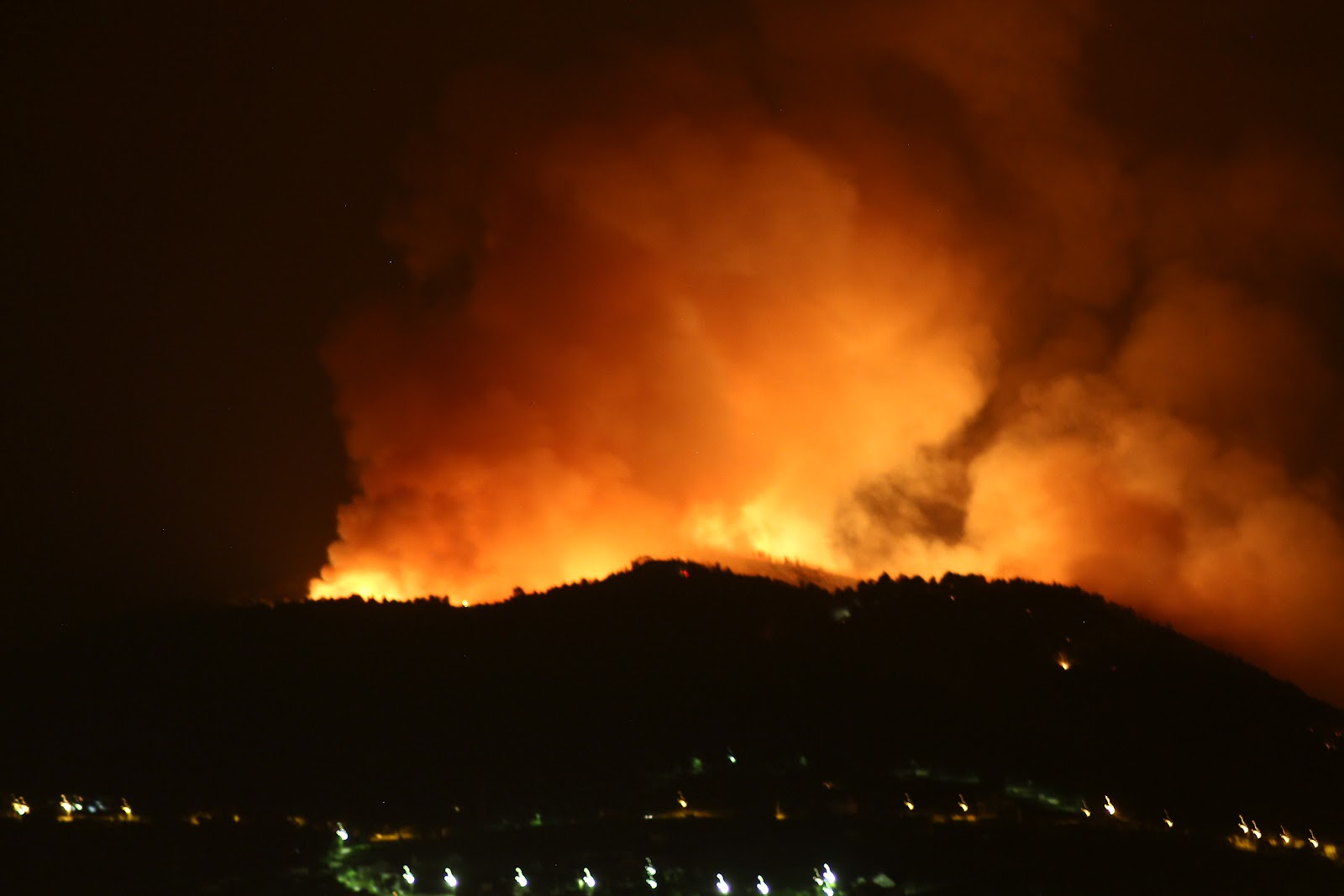
Today, May 4, marks the International Firefighters’ Day, a date that in 2026 takes on particular significance after the most devastating year recorded in the European Union since satellite measurements began. According to data from the European Forest Fire Information System (EFFIS) under the Copernicus programme, more than 1,079,000 hectares burned in the EU in 2025, an area equivalent to the island of Cyprus and nearly double the average for the 2006–2024 period. The Iberian Peninsula accounted for two-thirds of the total burned area, with 452,000 hectares in Spain and 270,000 in Portugal. However, these figures pale when the focus shifts to the Global South. Africa accounted for more than half of the total burned area worldwide, with around 246 million hectares affected, an area equivalent to nearly 60% of the EU. This highlights a global reality marked by inequality and limited visibility.
Human activity remains the main driver in most regions. In Galicia, where 118,966 hectares burned across 1,492 fire outbreaks, it is estimated that more than 70% of the fires were intentional. However, the report “State of Wildfires 2024–2025” indicates that prolonged drought was the dominant factor in extreme events recorded in South America and the Congo Basin. The combination of agricultural burning, rural abandonment, biomass accumulation, and an increasingly extreme climate creates a high-risk scenario.
Scientific evidence is clear. Climate change has drastically increased the likelihood of extreme fire weather conditions, by between 30 and 70 times in northeastern Amazonia and between 3 and 8 times in the Congo Basin. This results in longer and more intense fire seasons, even in areas historically less affected.
The consequences go far beyond the burned surface and reveal deep climate injustice. While fires in Los Angeles (burning 23,000 hectares) generated insured losses of 40 billion dollars, fires in Africa received little international attention and disproportionately low economic compensation. Invisible costs (ecosystem degradation, loss of livelihoods, and health impacts) are often excluded from official statistics.
Furthermore, in 2024–2025 wildfires caused fatalities in several regions (100 in Nepal, 34 in South Africa, and 30 in Los Angeles), confirming that the threat is global, but the response remains unequal.
The lack of prevention-focused public policies worsens a scenario that experts describe as a “new era of large-scale wildfires.” Instead of a model based almost exclusively on suppression, the scientific community calls for a shift toward active land management: creating agroforestry mosaics to break landscape continuity, restoring abandoned farmland, and planning the wildland–urban interface to protect communities.
Projections indicate that, without action, extreme wildfires could increase by up to 57% in Amazonia and 50% in the Congo Basin by the end of the century. However, with ambitious climate policies, this increase could be limited to less than 15%. The conclusion is clear: prevention and emissions reduction are key to slowing the spread of wildfires on an increasingly warmer planet.
Sources:
-
ONU News. ONU alerta para custos invisíveis dos incêndios florestais em 2025. https://news.un.org/pt/story/2026/01/1852111
-
Earth System Science Data (ESSD). State of Wildfires 2024–2025. https://essd.copernicus.org/articles/17/5377/2025/
-
EFEverde. Incendios forestales en la UE: 2025 fue el año más devastador desde que existen registros. https://efeverde.com/incendios-forestales-en-ue-2025/
-
AGIF. AGIF New Year`s message: wishes for 2026. https://www.agif.pt/en/agif-new-years-message-2026
-
Infobae. La Xunta cifra en 118.966 hectáreas la superficie quemada en Galicia en todo 2025. https://www.infobae.com/america/agencias/2025/11/04/la-xunta-cifra-en-118966-hectareas-la-superficie-quemada-en-galicia-en-todo-2025/
-
Clarity Movement Co. How is the 2025 wildfire season shaping up so far? https://www.clarity.io/blog/how-is-the-2025-wildfire-season-shaping-up-so-far#toc-north-america