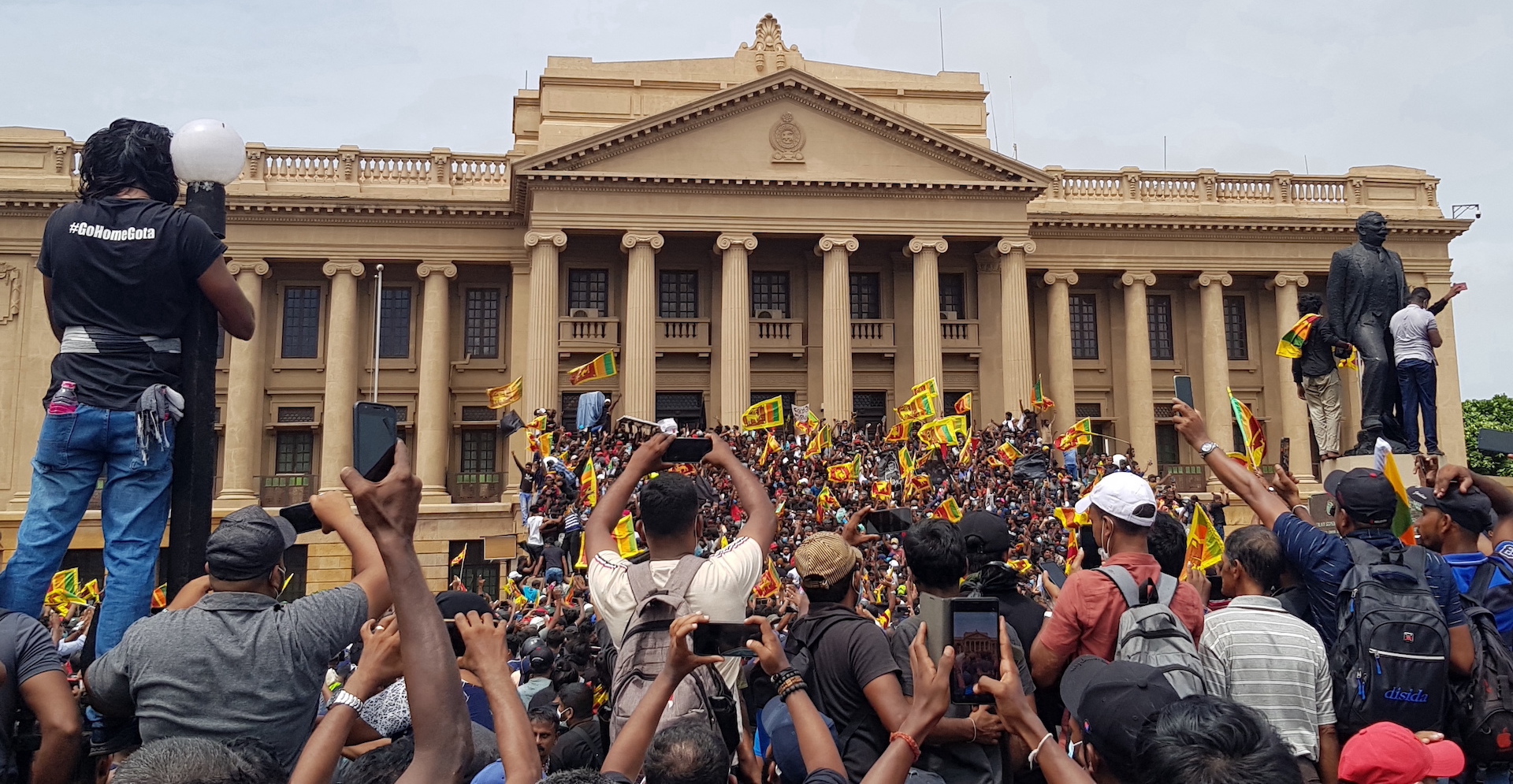
In 2022, Sri Lanka was sinking into the worst economic crisis in its independent history. Soaring inflation, shortages of food and medicine, and electricity cuts triggered a social explosion known as the “Aragalaya” movement (struggle). Protesters occupied the presidential residence in July that year, forcing President Gotabaya Rajapaksa to flee. Although parliament then elected Ranil Wickremesinghe to replace him, the open wound of popular discontent did not heal. This was the prelude to an electoral revolution that brought to power, for the first time, a left‑wing coalition outside the traditional dynasties.
Anura Kumara Dissanayake, leader of the “Janatha Vimukthi Peramuna” (JVP) and its electoral front “Jathika Jana Balawegaya” (JJB or NPP in English), obtained 42.3 % of the vote in the presidential elections of 21 September 2024. His party, which in the 2019 elections had barely reached 3 %, capitalised on discontent with an anti‑corruption and political renewal message. But the real earthquake came in the parliamentary elections of 14 November, when the NPP won 159 out of 225 seats, the largest absolute majority since 1978. This result marked a historic shift: even in the Jaffna district, the heart of the Tamil minority, the NPP won, unseating the traditional parties.
Once in government, Dissanayake largely maintained the IMF adjustment programme inherited from the previous administration. The 2026 Budget targets a primary surplus of 2.5 % of GDP. However, inflation rebounded to 5.5 % in May due to rising energy prices, and farmers protested over the lack of fair prices for rice. Despite these tensions, Dissanayake’s popular approval rating hovers around 75.5 %, according to the “Centre for Policy Alternatives”, reflecting sustained social support.
The government has launched symbolic and structural measures: the “Clean Sri Lanka” programme, launched on 1 January 2025, aims at fiscal discipline and modernising services. In addition, it launched an anti‑corruption and anti‑drug trafficking campaign that has already resulted in the arrest of sons of former ministers. In June 2026, Dissanayake delivered a speech in parliament in which he described his legislation as “civilising” the nation. The IMF approved in July a disbursement of 695 million dollars, pointing to a “notable” recovery, but warned of external risks due to the war in the Middle East.
Ultimately, what Sri Lanka experienced between 2022 and 2026 was finally a peaceful revolution at the ballot box. The citizen movement of the “Aragalaya” and the electoral victory of the NPP have transformed the political map, but the challenge of reconciling promises of social justice with fiscal discipline remains open. The new government walks between the legacy of the crisis and the hope of genuine change, while the opposition criticises austerity and security measures. The revolt is now institutionalised, and its success will depend on whether reforms reach the citizenry.
Sources:
-
IDEA (2024). Sri Lanka – September 2024. https://www.idea.int/democracytracker/report/sri-lanka/september-2024
-
ISAS (2024). Sri Lanka’s Parliamentary Election: The NPP Wins Historic Super Majority. https://www.isas.nus.edu.sg/papers/sri-lankas-parliamentary-election-the-npp-wins-historic-super-majority/
-
Central Bank of Sri Lanka (2026). CCPI-based headline inflation accelerated marginally in May 2026. https://www.cbsl.gov.lk/en/news/inflation-in-may-2026-ccpi
-
NewsOnAir (2026). IMF approves US$695 million disbursement to Sri Lanka under Extended Fund Facility programme. https://newsonair.gov.in/imf-approves-us695-million-disbursement-to-sri-lanka-under-extended-fund-facility-programme/
-
Daily Mirror (2026). AKD scores 75.5%; Sajith 29.4% in public approval. https://www.dailymirror.lk/breaking-news/AKD-scores-75-5-Sajith-29-4-in-public-approval/108-345672
-
NewsOnAir (2026). Sri Lankan President Anura Kumara Dissanayake Unveils Budget 2026 Focused on Fiscal Discipline. https://newsonair.gov.in/sri-lankan-president-unveils-budget-2026-focused-on-fiscal-discipline/