The Donald Trump administration intensified in 2026 a strategy of coercion against its European allies that is now openly described as vassalage. After its intervention in Latin America, Washington transferred its model of coercion to the European continent, where resistance still holds against an artificial far right that acts as a transmission belt. Vassalage to the empire dates back to the postwar period, but it is now intensifying explicitly and multidimensionally. The recent agreement between the USA and Denmark over Greenland could set a bad precedent.
Military and economic pressure materialized in direct threats. In January 2026, the White House announced a 10% tariff on eight NATO allies, which would rise to 25% in June as retaliation for “military activity in Greenland.” At the same time, the withdrawal of 5,000 U.S. soldiers from Germany and the threat to abandon NATO became tools of coercion to demand higher defense spending.
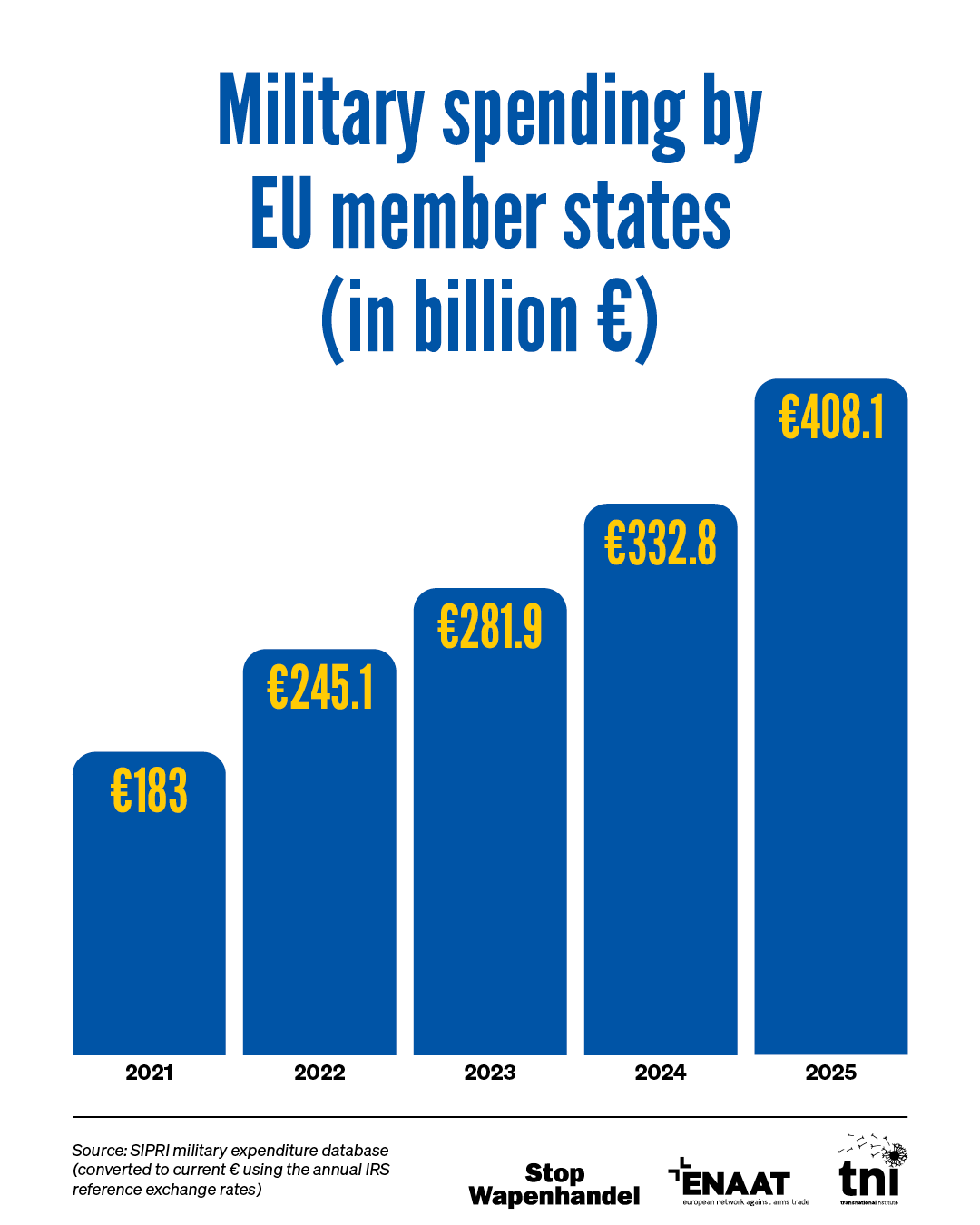
The United Kingdom and Germany illustrate partial surrender and its consequences. London saw Washington threaten to review its support for British sovereignty over the Malvinas Islands if it did not increase military spending. Germany accepted an accelerated militarization that directly benefits the U.S. arms industry. Chancellor Friedrich Merz announced in July 2026 an agreement to buy “Tomahawk” cruise missiles and deploy them on German territory, with a planned investment of nearly 3.4 billion euros. This operation coincides in time with a separate sale of naval systems approved by the State Department in April 2026, worth around 100 billion dollars.
Structural dependency reinforces this subordination. In 2026, it is estimated that two thirds (66%) of European imports of liquefied natural gas will come from the United States, consolidating a new dependency that replaces the Russian one. In the technological sphere, three U.S. “hyperscalers” (Amazon, Google, Microsoft) control more than 70% of the European cloud market, and the EU acknowledges an almost absolute dependency on advanced “chips.”
Ideological interference is completed by funding “think tanks” and organizations aligned with the “MAGA” movement in Europe, with a subsidy program of up to 4.9 million dollars that seeks to export its political agenda. This combination of military pressure, economic coercion and structural dependency paints a panorama in which Europe, despite its attempts at autonomy, remains trapped in an asymmetric relationship that intensifies as the hegemonic power loses the capacity to impose its will by other means.
Faced with this submission of political elites, social movements are reclaiming the anti-imperialist and anti-militarist discourse. For example, in April 2026, hundreds of protesters gathered in Madrid under the slogan “NATO no, bases out,” demanding the withdrawal of U.S. troops and denouncing the “war economy” that imperialism seeks to install.
Vassalage is not new, but it is now intensifying explicitly and without disguise. What was once presented as an alliance among equals now reveals its true nature: an extractive relationship in which Europe gives up sovereignty, resources and military capacity in exchange for protection that has become conditional, temporary and always revocable.
Sources
-
AP News (2026). Germany agrees deal to buy long-range US Tomahawk missiles, Merz says. https://apnews.com/article/germany-merz-trump-us-tomahawk-nato-russia-ukraine-36a701c79c5d305d30d279d72e48ec1e
-
El Debate (2026). Reino Unido suspende el acuerdo para entregar islas Chagos a Mauricio por la falta de apoyo de Estados Unidos. https://www.eldebate.com/internacional/20260411/reino-unido-suspende-acuerdo-entregar-islas-chagos-mauricio-falta-apoyo-estados-unidos_405660.html
-
Euronews (2026). EE.UU. suministrará dos tercios del gas licuado que importa Europa. https://es.euronews.com/business/2026/05/13/dos-tercios-del-gnl-que-importa-europa-procederan-de-ee-uu-en-plena-creciente-dependencia
-
Euronews (2026). La OTAN 3.0 de Trump, bajo la lupa: “Es poner pintalabios a un cerdo”. https://es.euronews.com/my-europe/2026/08/20/un-exembajador-de-eeuu-critica-el-lavado-de-imagen-de-la-otan-30-es-como-maquillar-a-un-ce
-
LRT (2026). Lithuania confirms receiving Donald Trump’s loyalty questionnaire. https://www.lrt.lt/en/news-in-english/19/3026279/lithuania-confirms-receiving-donald-trump-s-loyalty-questionnaire
-
People’s Daily (2026). Trump amenaza con aranceles del 10% a ocho aliados de la OTAN por las tensiones en Groenlandia. http://spanish.peopledaily.com.cn/n3/2026/0119/c31618-20415895.html
-
RTRU News (2026). Hundreds protest in Madrid against US-Israeli Iran war and bases amid NATO dispute. https://rtrunews.com/news/639067-protest-spain-nato-base-expulsion/
-
RTVE (2026). Las bases en Alemania, columna vertebral de la estrategia estadounidense en Europa e importante motor económico. https://www.rtve.es/noticias/20260503/bases-alemania-columna-vertebral-estrategia-estadounidense-europa-importante-motor-economico/17051439.shtml
-
Sputnik (2026). 美国批准向德国出售119亿美元的军事系统. https://cdn.sputniknews.cn/20260418/1070854261.html
-
The Next Web (2026). Europe’s cloud dependency is a political risk, not just a technical one. https://thenextweb.com/news/europes-cloud-dependency-political-risk
-
Times of India (2026). ‘Will only proceed with US support’: UK pulls out of Chagos deal after Donald Trump’s criticism. https://timesofindia.indiatimes.com/world/uk/will-only-proceed-with-us-support-uk-pulls-out-of-chagos-deal-after-donald-trump-criticism/articleshow/130187041.cms
-
Xinhua (2026). 德防长称驻德美军部分撤出计划“可以预见”. http://www2.xinhuanet.com/20260502/06dfc141d2964650a212e4b8497d1283/c.html
-
Yahoo News (2026). Why Does Trump Want To Give Millions of Dollars to Right-Wing Europeans?. https://www.yahoo.com/news/politics/articles/why-does-trump-want-millions-200007613.html
-
163.com (2026). 美国务院批准对德119亿美元军售. https://www.163.com/dy/article/KR26HTH40514BQ68.html