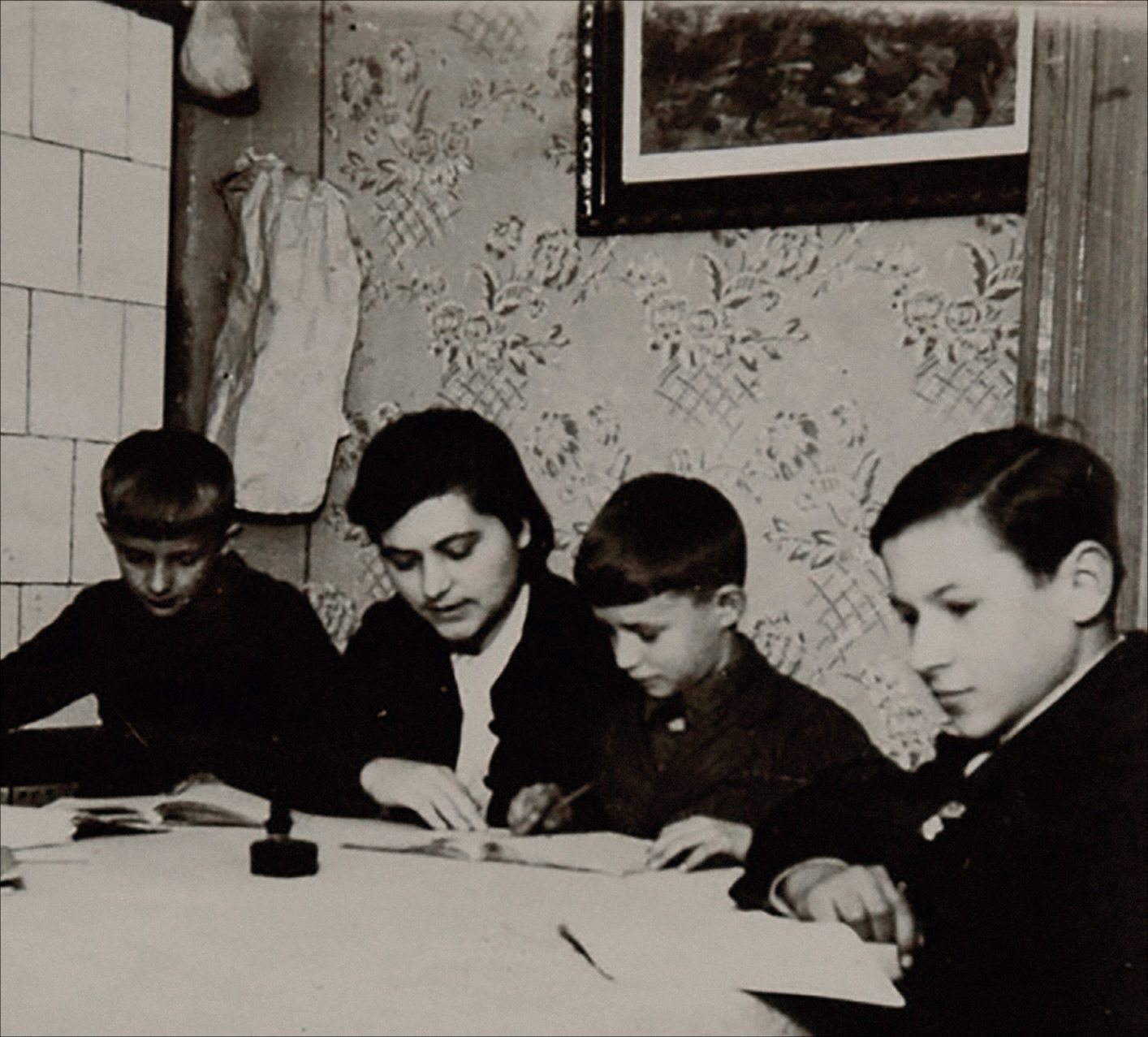
When the authorities of occupied Germany decreed, in October 1939, the suppression of all secondary and higher education for the Polish population, a movement of pedagogical resistance emerged. The so-called Tajne Nauczanie (Secret Teaching) was an illegal educational system that, over the five years of occupation, succeeded in educating about 1.5 million children in primary school and over 100,000 young people in secondary school, as well as hundreds of university graduates. This underground network operated in private homes and small groups, evading Gestapo surveillance and turning each class into an act of civil disobedience and defiance against the regime.
The Tajna Organizacja Nauczycielska (TON), a secret teachers’ organisation, was founded in late 1939 when the occupying government ordered the liquidation of autonomous teacher organisations. Its structures then went underground, turning the TON into an educational resistance network. Poland already had a long tradition of clandestine teaching before the war: during the partitions, the Russian, Prussian and Austrian occupiers had suppressed the Polish language and culture. As early as the second half of the 19th century, the Uniwersytet Latający (Flying University) had emerged in Warsaw, an illegal institution offering higher education courses in private homes.
The TON’s methodology was a creative response to repression. Without textbooks, teachers resorted to memorisation and debate, reciting poetry and mathematical formulas; classes in Polish history and geography were taught from memory. Micro-teaching, in groups of two to five people, allowed for personalised attention. This methodology not only ensured the continuity of knowledge, but also instilled in students a critical conscience and a national identity that the Nazis sought to destroy. The anti-authoritarian character of the movement lay in its decentralised and horizontal structure, based on neighbourly trust. Taking part in the TON was considered by the Germans as “high treason”, and thousands of teachers were executed or sent to concentration camps. The network was sustained by popular support and by its integration into the Polish Underground State, the government-in-exile. Education became a pillar of the resistance: the clandestine classes provided cadres for the armed resistance, and many teachers used their homes to hide Jews, providing them with false documents and education in Christian traditions to avoid identification.
After the war, in 1945, the Polish Ministry of Education recognised all certificates issued by the TON. And the history of clandestine teaching did not end with the defeat of Nazism: its philosophy of educational resistance continued to operate during the Stalinist period, when the new authorities imposed reforms that stifled pedagogical autonomy. The legacy of the TON remains as an example of how the transmission of knowledge and the defence of human dignity can be wielded as weapons against any form of authoritarianism.
Sources:
-
Instytut Pamięci Narodowej (2024). Wiesław Jan Wysocki: Tajne nauczanie. https://ipn.gov.pl/pl/historia-z-ipn/archiwum/195643,Wieslaw-Jan-Wysocki-Tajne-nauczanie.html
-
Wikipedia, wolna encyklopedia (2025). Tajne nauczanie. https://pl.wikipedia.org/wiki/Tajne_nauczanie
-
Virtual Shtetl (2018). Tajne nauczanie 1939–1945. https://sztetl.org.pl/pl/slownik/tajne-nauczanie-1939-1945