Since 1944, the institutions born out of the Bretton Woods agreements, the International Monetary Fund (IMF) and the World Bank, have met every spring in Washington. At these meetings, decisions are made about the global economy, decisions made by the Global North that set the political and economic agenda for the Global South.
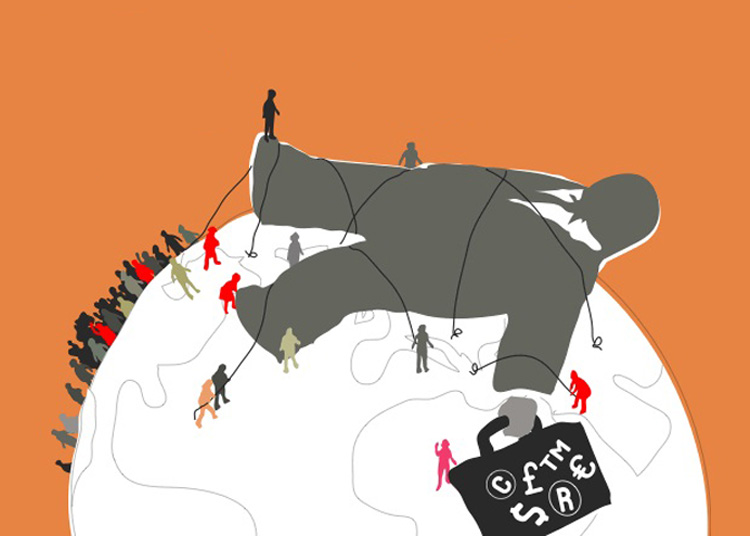
The power structure of these organisations still reflects the balance of power in 1944. The weighted voting system, where each country’s weight depends on its financial contribution, gives the major powers, especially the US, effective control over decisions. This configuration reflects a colonial world order that marginalises the countries of the Global South in matters affecting their own development.
The main mechanism of influence of the IMF and the World Bank lies in debt management. The loans they grant to countries in the South are often illegitimate (unfair debts), illegal (contrary to international law) or odious (contrary to the interests of the population). These loans are accompanied by adjustment programmes that impose uniform economic prescriptions: privatisation, trade liberalisation and fiscal austerity. Furthermore, debt payments are incompatible with financing a just energy transition and climate resilience in countries of the Global South.
The social consequences of these policies are well documented. In countries such as Argentina and Nigeria, structural adjustment measures led to increased poverty and precariousness, while guaranteeing debt payments to international creditors. Debt payments in countries such as Zambia represent 43.5% of their total capital. In 2023, the Global South paid more than 12 times what it spent on climate adaptation in debt repayments.
Mechanisms such as debt swaps have been proposed, whereby a government cancels or restructures part of its debt in exchange for a specific objective, such as investing in the fight against the climate crisis. However, these swaps legitimise illegitimately obtained debt and can be examples of colonialist greenwashing. Citizen debt audits, however, are tools that allow for analysis of the conditions under which that debt was acquired and the impacts on the people, as was the case with Ecuador. These audits, which are already being carried out in other countries such as Brazil and Senegal, make it possible to repudiate illegitimate debt and challenge the international debt system.
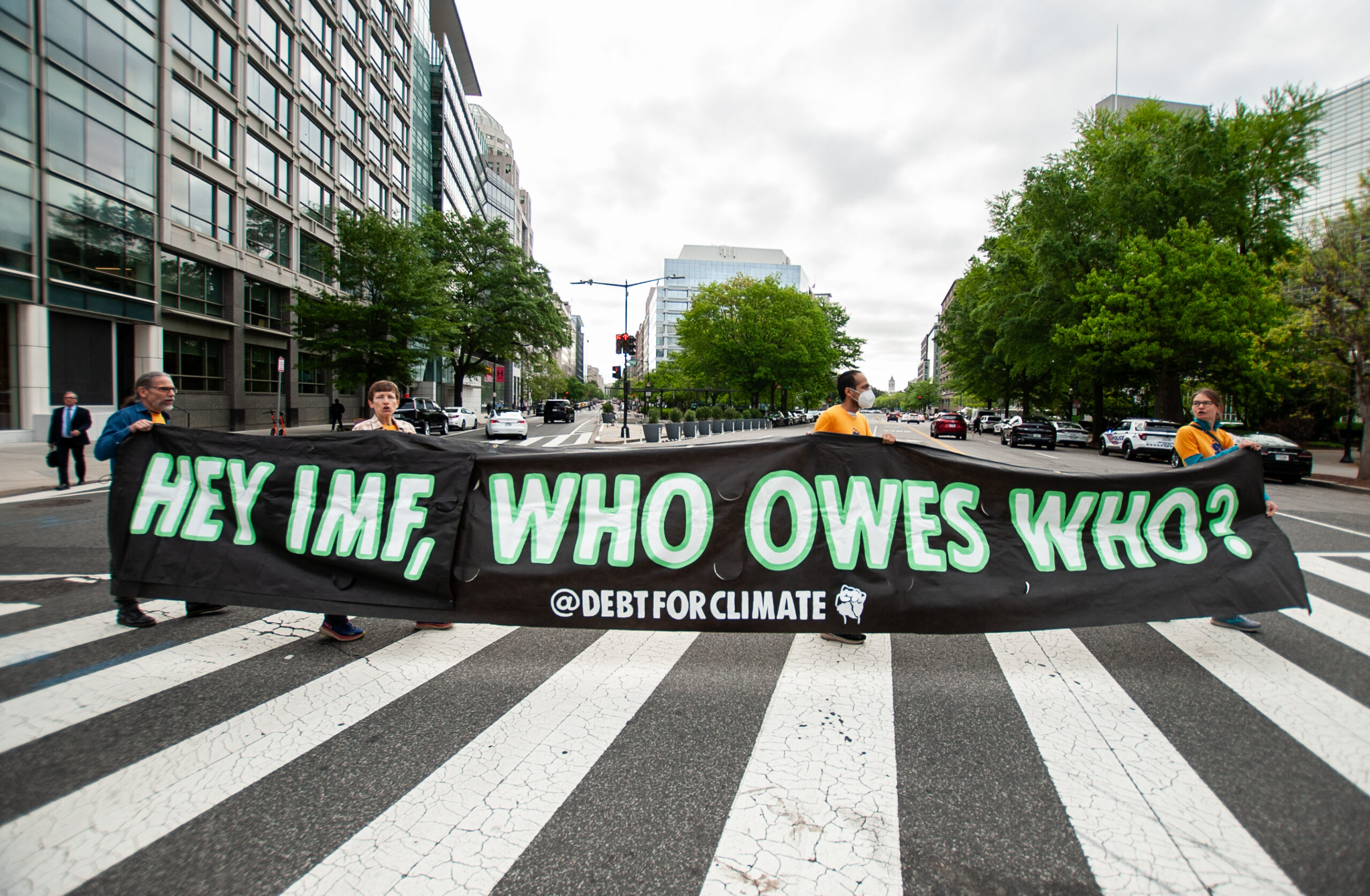
This year’s spring meetings will take place between 13 and 18 April in Washington, D.C., where a large mobilisation of rejection of these institutions is expected, promoted by social movements such as Debt for Climate, which demands the total and unconditional cancellation of the debt of the global South.
References:
-
FMI. (2026). Spring Meetings 2026. Recuperado de https://www.imfconnect.org/content/imf/en/meetings/SM26.html
-
Oxfam Intermón. (2025). A débeda que asfixia: o impacto das políticas do FMI no sur global. From https://www.oxfam.org/es/informes
-
Development Finance International (2023, 29 de novembre). 29 November – New Debt Service Watch briefing: The debt crisis is putting climate adaptation spending out of reach. From https://www.development-finance.org/en/news/832-debt-service-watch
-
Debt for Climate: https://www.debtforclimate.org/