
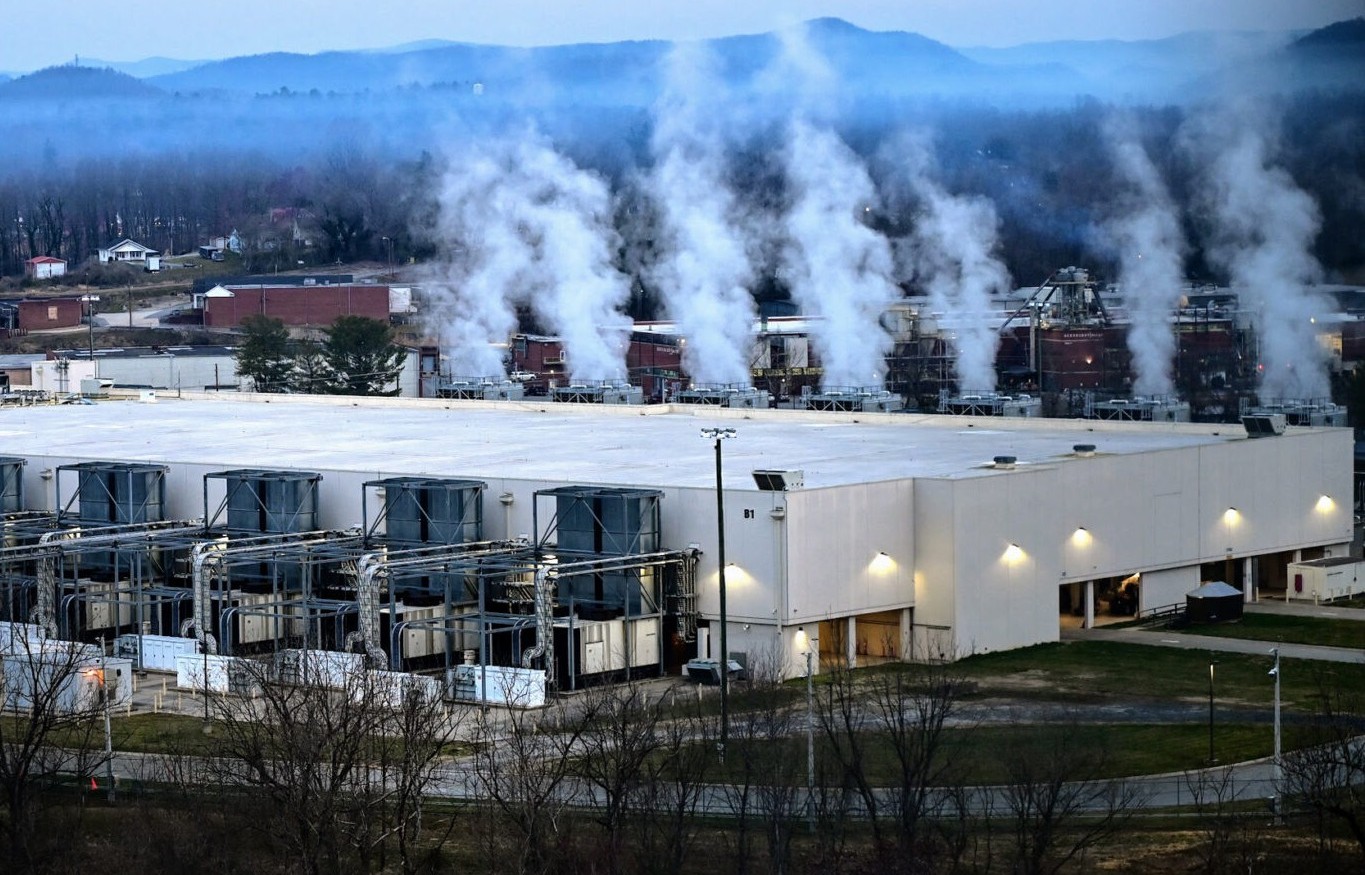
The rise of artificial intelligence is driving an unprecedented expansion of data centres worldwide. This digital infrastructure, conceived as “the cloud,” is in reality a network of physical facilities that consume enormous resources and whose ecological footprint is larger than previously estimated.
Data centres pose a serious affliction for the population, both for those living in the immediate vicinity and for those further afield. The continuous operation of fans and generators produces constant humming and infrasound that cannot be heard but can be felt, causing serious sleep problems and stress. Additionally, the location of these facilities often leads to air quality issues due to emissions, especially when operating with backup gas generators. Furthermore, one of the arguments used by governments and corporations to defend these infrastructures is job creation in the area, but the reality is that jobs are temporary during the construction phase, and subsequent ones are technical and filled by people from outside the locality. Finally, cooling systems consume millions of litres of water, while electricity consumption is massive. A single centre can consume as much energy as 50,000 homes, which can affect electricity bills and strain the grid. For example, Microsoft’s data centre in Middenmeer represents more than 1% of the total electricity consumption of the Netherlands.
Regarding environmental impact, in a climate emergency scenario like the current one, where this summer is seeing new temperature records broken across the planet and where for some weeks the collapse of the AMOC (Atlantic Meridional Overturning Circulation) seems to have been confirmed, the hyper-development of data centres only accelerates the current situation at a dizzying pace. A recent study by the company Allianz Trade reveals that these complexes emitted 286 million tonnes of carbon dioxide in 2025, a figure 57% higher than the estimates of the International Energy Agency. Artificial intelligence already accounts for between 15% and 20% of these centres’ electricity consumption, a proportion that could reach 40% by 2030. Without measures to decarbonise the grids, emissions could double, causing estimated annual climate damages of $154 billion, compared to the current $68 billion. According to UN data, the electricity consumption of data centres will reach 448 terawatt-hours (TWh) in 2025, which would place them as the 11th largest consumer country in the world, behind France.
But the impact is not limited to the carbon footprint. Water consumption, especially for cooling systems, is equally critical. It is estimated that data centres could require between 9,000 trillion litres of water by 2030, a volume comparable to the consumption of 1.3 billion people in the African continent. Moreover, this pressure on water resources is increasingly concentrated in regions with water stress, such as South Korea, India, Mexico or parts of China.
Faced with this situation, based on a model of uncontrolled expansion that devours communities and the environment, the population is beginning to mobilise and respond with increasing force, pressuring authorities to achieve moratoriums or initiate legal proceedings that allow them to preserve their territory, their resources and their lives.
Sources
-
Allianz Trade (2026). Hidden Environmental Cost of AI Could Exceed $50 Billion per Year by 2030. https://www.allianz-trade.com/en_global/news-insights/press-releases/2026/hidden-environmental-cost-of-ai-could-exceed-50-billion-per-year-by-2030.html
-
Bernama / Anadolu Ajansı (2026). AI’s Environmental Cost Threatens Water, Land Resources For Billions By 2030: UN Report. https://www.bernama.com/en/world/news.php/?id=2576337
-
NOS (2026). Eén Microsoft-datacenter gebruikt 1 procent van alle stroom in Nederland. https://nos.nl/artikel/2622984-een-microsoft-datacenter-gebruikt-1-procent-van-alle-stroom-in-nederland
-
Reuters / The Straits Times (2026). Data centres emitting more CO2 than thought, study shows. https://www.straitstimes.com/world/europe/data-centres-emitting-more-co2-than-thought-study-shows
-
UOL Notícias / RFI (2026). Em meio ao aumento da temperatura na Europa, ONU pede transparência sobre risco ecológico da IA. https://noticias.uol.com.br/ultimas-noticias/rfi/2026/06/23/em-meio-ao-aumento-da-temperatura-na-europa-onu-pede-transparencia-sobre-risco-ecologico-da-ia.htm
-
University of Exeter / Yale e360 (2026). Collapse of Atlantic Currents May Already Be ‘Locked In’. https://e360.yale.edu/digest/amoc-collapse-10-percent
-
UNU-INWEH (2026). Environmental Cost of AI’s Energy Use: Carbon, Water and Land Footprints. https://unu.edu/inweh“